Truth and deception
The HumansTruth and deception form a changing ethical problem for the alien narrator: concealment begins as a practical condition of his assignment, but becomes harder to separate from the relationships he develops on Earth. His account repeatedly turns on who knows what, what he chooses to reveal, and whether a lie protects someone or merely serves his own purposes. By the end, truth is not presented as simple disclosure. It is bound up with accountability, trust, and the difficult judgment of what another person needs to hear.
Concealment as mission and survival
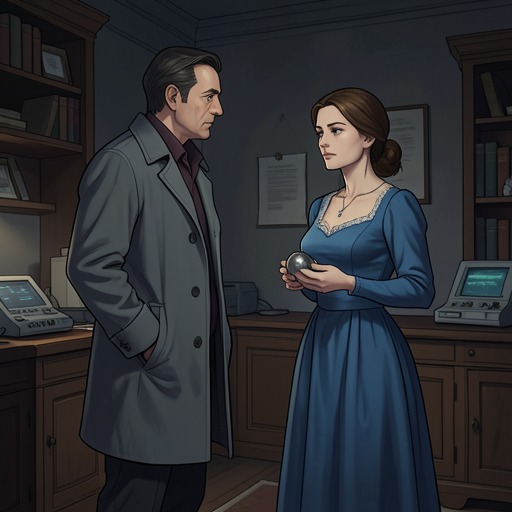
At first, the alien narrator treats information as something to extract and control. When Isobel Martin, author of the unfinished novel, visits him, her account of Gulliver Martin staying with his grandmother does not answer the question he considers urgent: what she knows about his achievement and what she may have told others. He recognizes that he intends to kill her, though not immediately, and still presses for information. The scene makes the distance between factual inquiry and moral truth plain: his questions are not innocent requests for knowledge but part of a plan to remove a perceived threat.
His disguise depends on a more immediate deception. During a contact with another man, the alien narrator briefly appears as himself rather than as Andrew Martin. The man sees the discrepancy, but the narrator quickly restores the appearance of Andrew Martin and prevents him from responding. The episode shows deception operating not only through words but through the management of what another person can perceive and report. The narrator’s identity is hidden because his mission requires it; the means of preserving the disguise reveal how coercive that concealment can become.
The narrator’s changing response to human attachment complicates this instrumental view. Witnessing Tabitha Russell care for a dying person, he understands their dependence on one another as love, and finds that he cannot dismiss it as weakness. That recognition does not erase his earlier conduct, but it begins to unsettle the assumptions that made concealment and harm seem like ordinary tasks. Knowledge of human feeling changes what he can tell himself about the people around him.
Lies inside intimate relationships
With Isobel Martin, deception enters the domestic relationship through a lie about the roof incident involving Gulliver Martin. When Isobel challenges him over not calling for help, he says that he did, while acknowledging to himself that the claim is false. He also understands that the wider situation rests on a false premise: she believes him to be her husband. The lie is therefore not an isolated cover story. It belongs to an entire assumed identity, one that lets them share a household even as it makes genuine trust difficult.
A more dangerous breach occurs when the hosts gain control of the narrator. Seeing Isobel asleep, they regard her as merely human and prepare to kill her. The narrator’s hand makes contact, and Isobel’s sleepy expression of love interrupts the collective identity that has overtaken him. He returns to a distinct sense of self and realizes how narrowly she has escaped. The scene makes truth a matter of recognition as much as speech: he sees Isobel not as an interchangeable human, but as someone toward whom he has particular feelings. His growing attachment changes what he is capable of doing.
The affair forces a different kind of disclosure. When Isobel asks who the other woman is, the narrator considers evasion but concludes that love requires him to tell the truth. He admits that he does not know the woman in a meaningful sense, that he does not love her, and that he loves Isobel. His explanation of the affair as pleasure rather than attachment does not make it harmless; Isobel responds that she no longer knows who he is. Her reaction exposes the limit of confession: telling the truth can end concealment without repairing the injury or restoring the identity the other person thought she knew.
Confession, uncertainty, and care
The narrator’s confession about himself is also difficult to receive. He tells Isobel that he is not from Earth, that he had been immortal and unable to feel pain, and that he gave those capacities up. But she is no longer listening. The disclosure may be true, yet it cannot compel belief or undo the hurt between them. The contrast separates factual candour from reconciliation: truth can be offered sincerely and still fail to reach the person to whom it is addressed.
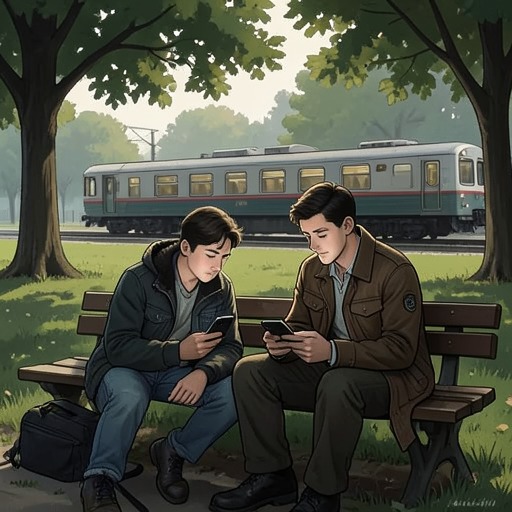
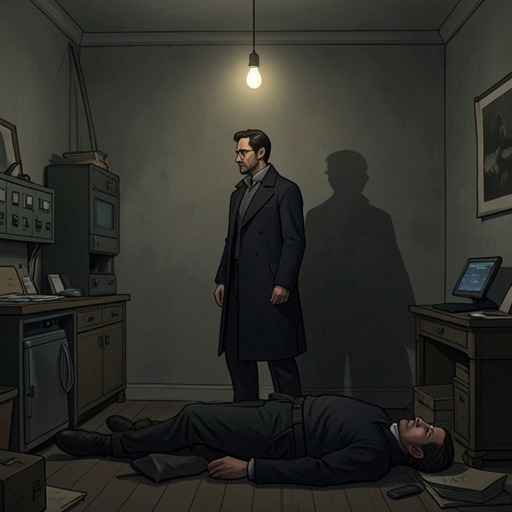
Later, the narrator tells Gulliver Martin the full account of his father’s death, his own replacement of Andrew Martin, and the order to kill Gulliver and Isobel. He explains that he could not carry out the assignment because he had come to empathize with and love them. This revelation changes Gulliver’s understanding of his father and of the narrator, but the narrator also confronts the limits of what he knows. Gulliver wants reassurance that his father did not suffer. The narrator cannot establish whether this is true, yet tells him that it is. The lie is deliberate comfort, not evidence; the narrator understands it as a human choice made for someone he loves.
The distinction matters because the novel neither treats every lie as equally culpable nor turns kindness into a license to deceive. The narrator’s earlier concealments protected his mission and his assumed identity. His reassurance to Gulliver instead answers a grief he cannot resolve with knowledge. In both cases, he chooses what to say, but the relationship and purpose behind that choice have changed. His developing humanity appears partly in learning that truthful speech and loving action do not always coincide neatly.
The narrated self and the limits of proof
After the events with Gulliver, the narrator considers denying that he is an alien. He imagines presenting the story as a breakdown, invoking an unreliable narrator, and explaining away what Gulliver saw through ordinary possibilities. He recognizes why such a version might persuade: people often prefer mundane explanations to a reality that threatens their view of the world. The possibility exposes the narrator’s control over the story itself. He could offer an account that would make his experience easier to dismiss, even if it contradicted what he believes happened.
He rejects that retreat as disrespectful to the people involved and inconsistent with the love he has come to feel. Yet he also reflects that objective truth is not easily available to those living through the events: each person has a perspective, and choosing one account means committing to a version of reality. This reflection does not cancel the difference between truth and falsehood. Rather, it shows how the narrator’s story asks the reader to assess both what he claims and why he might be tempted to revise it.
The concept finally rests on an unresolved tension. The alien narrator’s initial deception makes him dangerous; later, his willingness to confess exposes him to rejection, while his uncertainty about Gulliver’s father leads him to offer reassurance he cannot verify. His account does not end by proving that every truth should be spoken or that every comforting lie is justified. It traces a more difficult change: he begins to understand that words carry obligations to particular people, and that love makes both honesty and deception morally consequential.